
PDP





Partner Perspectives
December 22, 2025
Utilizing trim records to proactively manage hoof health
By Brady Zuck
Zinpro
Proactive hoof health management remains a critical priority for dairy operations, driving better cow comfort and productivity. Proper lesion identification and accurate record keeping build the foundation for success. Analyzing data to identify trends in seasonality, stage of lactation, parity, or pen gives a dairy team and its consultants and partners the ability to focus on the areas that can be improved.
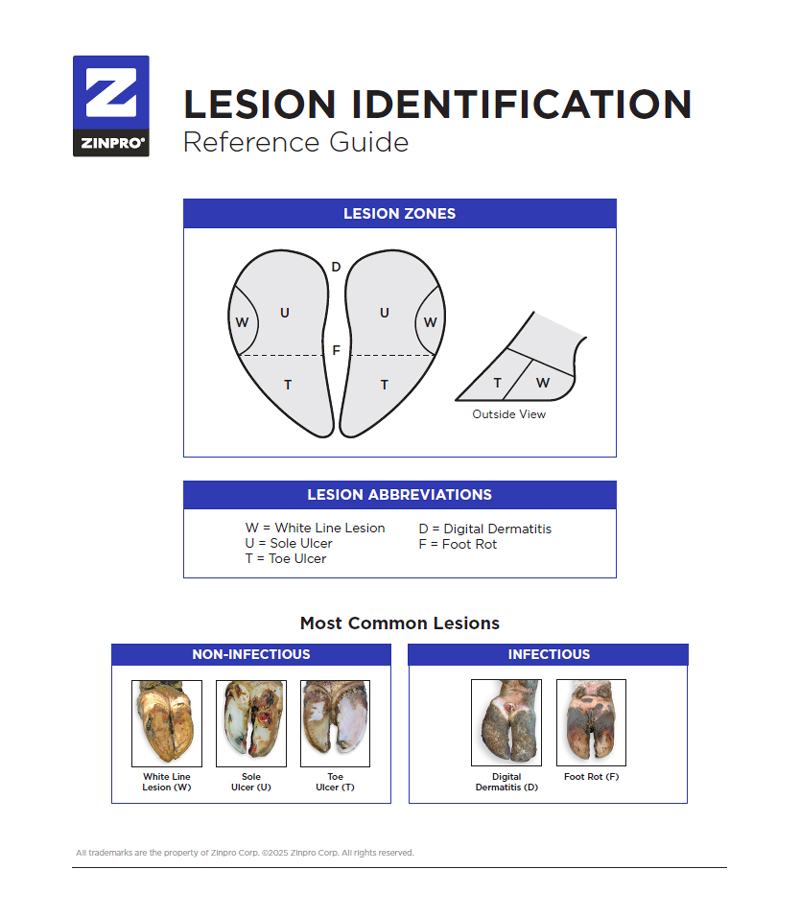
Accurate trimming and lameness incidence records help us get a clearer picture of what is happening on the dairy. A standard method for recording lameness helps us dig into the data and the underlying causes of the issue. For example, “abscess” or “block” on the trim sheet does not give us much information on what type of issue the trimmer encountered with that animal. Zinpro has created a Lesion Identification Guide that helps properly identify lesions (see image below). When clear identification is used, we can all speak the same language.
There are two categories of lesions that cause lameness in dairy cattle: infectious and non-infectious.
Infectious lesions include digital dermatitis (hairy heel warts) and foot rot. These are caused by an infection of the skin and inflammation of the hoof. Good cow hygiene, foot bathing, and proper nutrition can decrease incidence of infectious lesions.
Non-infectious lesions include sole ulcers, white line abscesses, and toe ulcers. White line abscesses occur when the wall of the hoof separates from the sole at the junction known as the white line. Proper grooving and traction are very important to prevent white line abscesses, which often occur due to slipping or concussion. Sole ulcers may also be referred to as “standing up” disease, resulting from cows that spend too much time on their feet. Prioritizing cow comfort — through proper stall size, effective heat abatement, and managing time spent away from the pen — ensures adequate resting time and helps reduce the risk for sole ulcers. Toe ulcers, while less common, are often the hardest to treat. The toe is the strongest part of the hoof as it has the support of the hoof wall on the side. Increased wear due to rough surfaces can wear the toe thin, exposing it to damage.
Functional maintenance trimming is vital to managing hoof health. Ideally, we would like to see cows trimmed twice per year: once in the dry period, and then mid-lactation. At the time of calving, cows produce hormones that relax their muscles and tendons to allow for the calving process. The tendons in the hoof are also impacted, allowing the pedal bone to settle. Cows that are properly trimmed during the dry period have the correct foot angle and balance to reduce the impact of the structural changes that happen around the calving period. A mid lactation trim focuses on setting a proper hoof length and depth.
Proactively managing hoof health is truly a team effort. When our teams are equipped with the right information to speak a common language, and a means to accurately record issues that do arise, we can then spend time reviewing the data. The data helps us dig deeper into the lesions that are causing the most problem on our farm. As we continue to evaluate records annually, we can create a scorecard for our operations and benchmark our progress, as we work towards a common goal of improved hoof health and productive cows.
Brady Zuck is a Zinpro Account Manager, a Mission Partner of Professional Dairy Producers®. He can be reached at bzuck@zinpro.com.
PDP is Dairy's Professional Development Organization. Producer-led and membership-based, we're here to share ideas, solutions, resources and experiences that help individual dairy producers – and our industry as a whole – succeed. Our focus is on producer professionalism, stakeholder engagement and unified outreach.
Site Hosted & Maintained by USAgNet