PDP






Partner Perspectives
December 22, 2025
As milk price drops, calf sales provide crucially needed revenue
By Lucas Fuess
Rabobank
There is no shortage of milk in the country right now. October marked further impressive growth for U.S. dairy, with milk production climbing 3.7% year-over-year, the fifth straight month of growth above 3%. This surge underscores the industry’s aggressive expansion, as 20 of the top 24 milk-producing states posted gains. Kansas led the charge with a staggering 21.2% increase, while California, Wisconsin, and Idaho, America’s dairy powerhouses, recorded solid growth of 6.9%, 1.8%, and 7%, respectively. Despite this production boom, October brought a slight dip in cow numbers, down 6,000 head after 15 consecutive monthly increases. Still, the U.S. herd remains historically large, up 208,000 head from last year, following a massive build-up of 258,000 head between mid-2024 and late 2025. Productivity continues to rise, too: milk per cow jumped 1.4% year-over-year, the ninth straight gain.
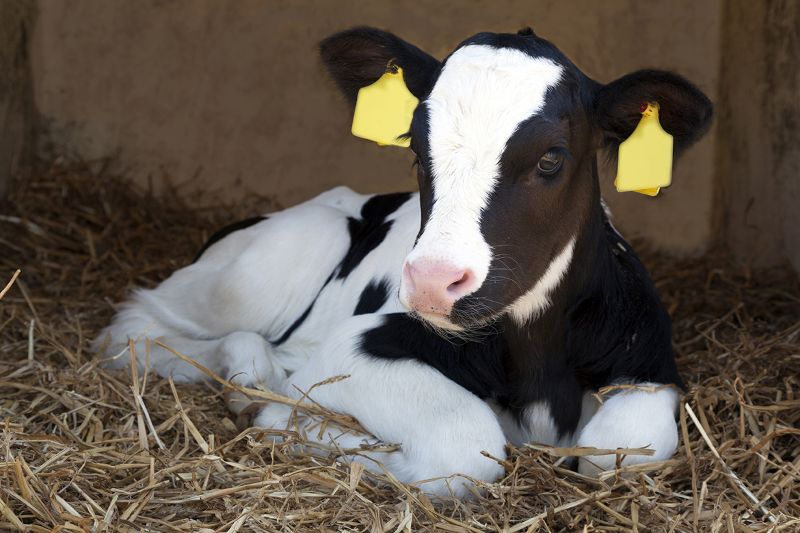
Looking back at one year ago, high milk prices in 2024 fueled profitability and expansion, but as prices softened over the past few months, farmers have leaned on alternative revenue streams to supplement income. Beef/dairy cross calves, which can fetch $1,400 or more, are supplementing revenue in a time when milk prices have dipped below the cost of production. This incentive is reshaping herd strategies, as producers balance dairy calf needs with lucrative crossbreeding opportunities. While slaughter rates have ticked up, significant herd reductions aren’t expected soon. Margins remain under pressure, though; the Dairy Margin Coverage program reported an $11.52/cwt margin in August, the highest since March but below last year’s highs. With feed costs expected to stay low, weaker milk prices will challenge profitability heading into 2026.
Component growth is persisting alongside the additional volume we’re seeing. Milkfat continues its upward trajectory, likely to set another record in early 2026 after hitting 4.46% in January of this year. Year-to-date, milkfat is up 2%, supporting robust growth in product production. Cheese production rose 2% through August, helped by expanded processing capacity, while butter surged 6.1%, aided by ample cream supplies. Conversely, NFDM/SMP output fell 4.7% as demand remains sluggish. In the whey arena, manufacturers continue to pivot toward higher-protein products like WPC80 (+2.1%) and WPI (+10.8%).
Strong export demand has helped absorb excess supply. Through August, U.S. dairy exports posted their third consecutive monthly gain, with cheese shipments hitting all-time highs. August alone saw a 28% year-over-year cheese shipment increase, the largest monthly volume ever. Butter exports soared 190% YOY in August, buoyed by U.S. price discounts versus global competitors. While cheese exports may moderate in 2026 as global prices converge, U.S. butter remains attractively priced for foreign buyers.
RaboResearch forecasts U.S. milk production to grow 1.8% in 2026, following an estimated 2.8% increase in 2025. Demand trends remain mostly positive, though export momentum could soften after a stellar 2025. With Class III prices averaging $17.38/cwt in Q3 and dipping to $16.91 in October, coupled with even lower Class IV values, farmers will continue leveraging calf sales and strategic herd management to navigate tighter margins.
RaboResearch F&A North America provides dynamic insight and value to dairy industry members, and other Rabobank clients and stakeholders. Learn more about the exclusive research reports for a competitive edge here.
Lucas Fuess is a senior dairy analyst with Rabobank, a Mission Partner of Professional Dairy Producers®.
PDP is Dairy's Professional Development Organization. Producer-led and membership-based, we're here to share ideas, solutions, resources and experiences that help individual dairy producers – and our industry as a whole – succeed. Our focus is on producer professionalism, stakeholder engagement and unified outreach.
Site Hosted & Maintained by USAgNet