PDP






Partner Perspectives
December 22, 2025
Where to spend and where to save when you need to tighten your farm belt
By Keith Engel
GEA
With today’s milk prices, you’re likely trying to find new places to save money on your dairy. While you work to tighten your farm’s belt, there are places to save money and places where you should spend to save long-term.
Scheduled maintenance
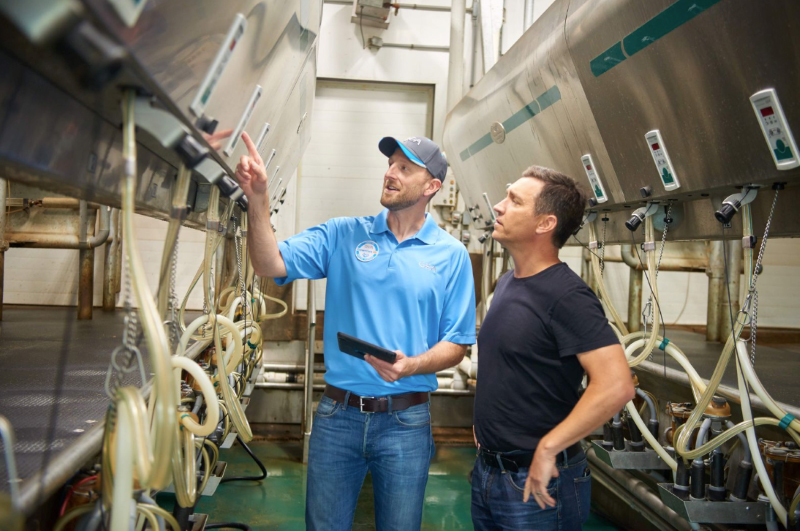
If you want to keep your milking system operating at peak performance, cutting maintenance costs is not the way to go. Regular, scheduled maintenance can prevent emergency repairs and costly parlor downtime.
Start with the manufacturer’s recommendations for maintenance frequency, then adjust according to your farm’s performance history. Some dairies might need to change a component out at six months instead of 12 – where another dairy can go 18 months. Hours of operation, facility type and wash regimen are just a few things that can impact a part’s service interval.
Also, many dairy plants are setting higher standards with LPC, PI and PLC requirements. For example, if you’re shipping milk to a plant that requires an LPC of 50 cfu or less – scheduled maintenance needs to be performed more periodically than manufacturer recommendations to reach and maintain that level of quality. Stricter standards require a stricter routine maintenance schedule.
Work with your milking equipment dealer to customize a maintenance schedule and budget that works for your farm and helps you reach your milk quality goals.
Most importantly, you want to avoid emergencies. No matter how tempting it may be to hold back, even when milk prices are low, it pays to protect your investment in equipment with scheduled care and maintenance.
Teat dip
Many new teat dips have hit the market in recent years. They combine multiple germicides, such as iodine with a non-iodine germicide, to broaden pathogen control and support skin health, at very economic price points.
For example, many of the options at GEA now match the effectiveness of a traditional 1% iodine teat dip at lower iodine concentrations and added teat conditioning benefits.
These high-performance alternatives provide flexibility without compromising efficacy or comfort.
Now is a great time to review your teat dip and care program with your local dealer. As teat dip formulas advance, you have a wider range of options to protect your herd while keeping costs in mind.
Clean in Place (CIP) cleaners
Dairies not only save on water, but they can also save on energy and time through the use of improved wash cycle products, designed for efficiency. Traditionally parlors run a three-cycle wash system, but advanced CIP products now allow farms to cut one of the cycles.
On most dairies this equates to hundreds of thousands of gallons of water saved per year. Along with reduced water usage, that’s less water heated and less wastewater to store and manage.
Cutting out one wash cycle also decreases downtime in the parlor, allowing time for more cows to be milked if a farm wanted to increase herd size.
Through innovation, technology, and an equipment service provider you can trust, your farm can thrive, even when times are tough. Reach out to your local dealer today to discuss your maintenance program and the everyday products you use on your dairy. Small adjustments can help bring bigger and better results to your bottom line.
Keith Engel is GEA Business Development Manager – Hygiene & Milk Quality for GEA, a Corporate Partner of Professional Dairy Producers®. He can be reached at keith.engel@gea.com.
PDP is Dairy's Professional Development Organization. Producer-led and membership-based, we're here to share ideas, solutions, resources and experiences that help individual dairy producers – and our industry as a whole – succeed. Our focus is on producer professionalism, stakeholder engagement and unified outreach.
Site Hosted & Maintained by USAgNet