
PDP






Partner Perspectives
December 22, 2025
Team approach to managing hoof care
By Demetrio Bautista Ortiz
Lameness is considered one of the main animal welfare concerns in the dairy industry. It ranks as one of the highest cost problems for dairy producers, resulting in $6 billion in losses, behind subclinical ketosis at $18 billion and clinical mastitis at $13 billion. (Von Keyserling, 2009)
The financial cost of lameness per cow varies from $100 to $200 depending on the type of lesion (Cha 2010). The estimated prevalence of lameness in U.S. dairy herds ranges from 20 to 55% (Espejo 2006, Von Keyserling 2012, Solano 2015) with an average of 27.5% prevalence in the last two decades.
The high financial cost is due to a variety of factors including production loss, increased culls, decreased reproductive performance, veterinary treatments and labor costs, and a change in cow behavior as a response to the pain.
In addition to the economic losses associated with lameness, it also directly impacts the cow’s animal well-being, a topic that is increasingly scrutinized by the consumer.
With this in mind, it is important to prioritize hoof health. While the task may seem daunting, there are three considerations to get started:
- A team approach to lameness identification
- Quality hoof care training
- An action plan for success
A team approach
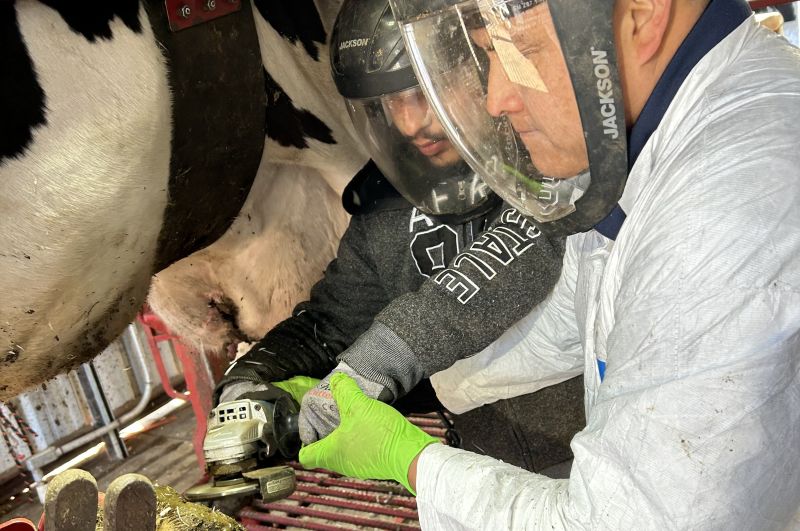
On large dairies, one to two people are not enough to identify and treat all lame cows. Involving more people, including the milking team, breeding and maternity crews, and veterinarians in identifying potential cases of lameness improves treatment and recovery.
Consistent identification of lameness positively impacts the chronicity of the lesions and their recovery. This helps control the lesions with the highest incidence, including digital dermatitis, white line abscesses and sole ulcers, which represent 93% of the total lesions. This process shrinks the workload for trimmers and improves the attitude of technicians during busy periods.
Quality training
Investing in training for the hoof care team is also crucial to the success of a hoof care plan and provides a positive impact on a dairy’s bottom line. Meaningful hoof care knowledge is crucial to keep cows healthy and productive; it affects cows at all stages, from heifers close to calving to the most adult cows.
Herd managers, trimmers and any other personnel involved in herd health should receive basic training to ensure the hoof care management plan can be executed effectively.
Action plan
A quality training program includes a basic action plan to achieve results. The following items should be included:
- Reliable data collection and analysis
- Identify challenges based on the data
- Proper handling and operation of the footbath
- Factors that affect the onset of lesions (handling, floors, facilities, etc.)
- Execute a work strategy aimed at the lameness group with the greatest problem
- Classification of lesions
- Identify lameness treatment and follow-up
With a consistently executed action plan focused on the groups with greatest challenges, we can obtain an outcome of less than 10% lameness in the first four to six months.
Facing the challenge of hoof health is essential for the sustainability of the dairy. Involving all management areas in lameness identification, quality hoof care training and establishing an action plan for success are key factors in ensuring success in hoof care management.
Demetrio Bautista Ortiz is a Hoof Care Specialist at Comfort Hoof Care, a Corporate Partner of Professional Dairy Producers®. He can be reached at dbautista@savecows.com.
PDP is Dairy's Professional Development Organization. Producer-led and membership-based, we're here to share ideas, solutions, resources and experiences that help individual dairy producers – and our industry as a whole – succeed. Our focus is on producer professionalism, stakeholder engagement and unified outreach.
Site Hosted & Maintained by USAgNet